
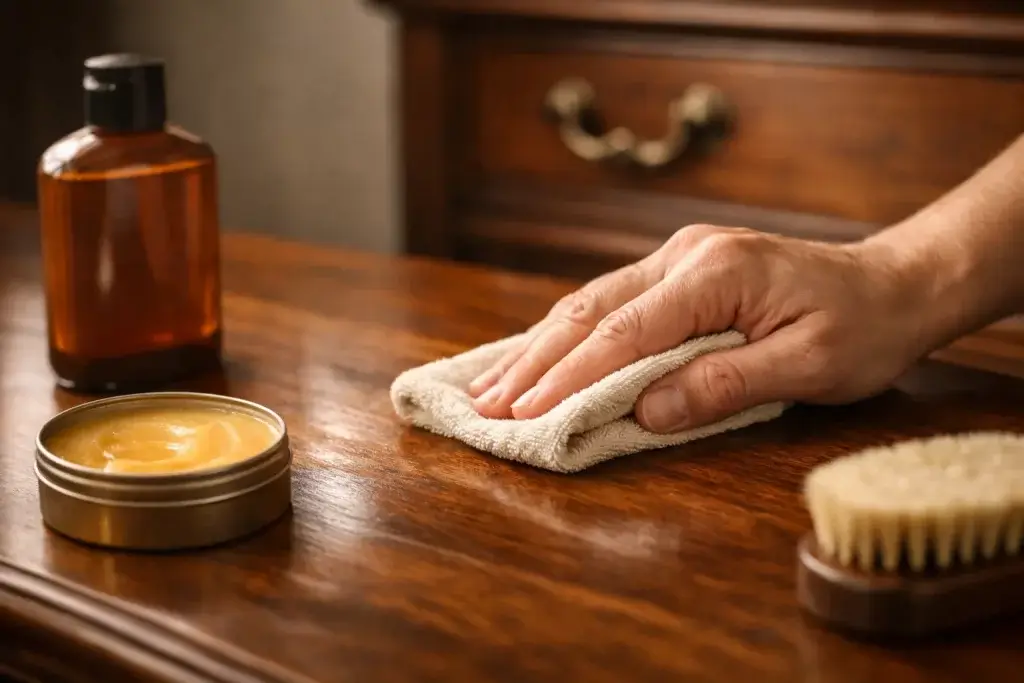
Wooden furniture is rarely just furniture. It is the dining table where families linger after meals. The chair that creaks the same way it always has. The cupboard that has quietly moved homes with you. Learning how to polish wooden furniture is really about learning how to care for the things that hold your everyday life together.
Wood brings warmth into a home in a way few materials can. Over time, though, dust, sunlight, and daily use take their toll. Surfaces lose their glow. Corners look tired. The good news is that wood responds beautifully to care. A thoughtful polish can revive a piece and make an entire room feel refreshed again.
At Classy Furniture, we often meet homeowners who believe their furniture has reached the end of its best days. In reality, it usually just needs attention. Polishing is not about perfection. It is about preservation. When you care for wood regularly, you keep its story alive.
Why Polishing Matters: Essential Benefits for Beauty, Protection, and Longevity
Polishing is not just about shine. It creates a protective layer that helps wood stand up to daily life. Spills, fingerprints, heat, and minor scratches all leave marks over time. Polish acts like a quiet shield, reducing damage before it settles in.
Wood is a living material. When left dry, it can fade, crack, or warp. Polishing nourishes the surface and keeps the grain healthy. It also brings out natural colour variations that often disappear under dust and neglect.
We have seen how regular polishing can add years to furniture. Chairs stay sturdy. Tables keep their smooth finish. Cupboards open without resistance. A little effort every few months prevents costly repairs later and keeps furniture strong and beautiful.
Choosing the Best Wood Polish: Exploring Wax, Oil, and Modern Finishes
Not all wood polish works the same way.
- Wax-based polishes: Wax-based polishes are ideal for hardwood furniture. They create a soft glow and help repel dust. They are perfect if you like a natural, low-gloss finish.
- Oil-based polishes: Oil-based polishes work deeper. They soak into dry or untreated wood and restore lost moisture. These are especially helpful for older furniture that feels rough or dull to the touch.
- Water-based polishes: Water-based polishes are lighter and dry quickly. They are great for regular upkeep and homes sensitive to strong smells.
- Acrylic sprays and professional finishes: Acrylic sprays and professional finishes offer smooth results and are often used on cabinets and detailed furniture.
We always suggest avoiding silicone-heavy products. They look impressive at first but leave residue that makes future polishing or repainting difficult.
The Ultimate Toolkit: Essential Wood Polishing Materials and Tools
You do not need a complicated setup to polish wood well.
- Microfiber cloths are your best friend. They clean without scratching and buff without leaving lint behind.
- A mild wood cleaner helps remove sticky residue before polishing.
- Fine-grit sandpaper or super-fine steel wool smooths uneven patches during preparation.
- Soft cloths give you control during application.
- Small brushes help reach carved areas and joints.
- Gloves protect your hands.
- Old toothbrushes work surprisingly well in tight corners.
How to Polish Wooden Furniture: A Practical Step-by-Step DIY Guide
- Start by clearing the surface. Remove dust using a dry cloth.
- For sticky spots, use a mild cleaner and wipe gently. Let the surface dry completely before moving on.
- If the wood feels rough or uneven, lightly sand it. This helps remove old polish and allows the new layer to settle evenly.
- Always test your polish on a hidden area first to avoid surprises.
- Apply a small amount of polish using circular motions, following the direction of the grain. Work in sections rather than rushing.
- Use a soft brush for carved details where cloths cannot reach.
- Wait 15 to 20 minutes before removing the polish.
- Buff gently with a clean cloth along the grain.
- Allow the surface to rest for another 20 to 30 minutes before placing items back.
Avoid the Sticky Surface: Common Wood Polishing Mistakes to Skip
- Using too much polish leaves a sticky layer that attracts dust.
- Skipping cleaning locks dirt particles into the surface.
- Polishing against the grain creates streaks and uneven shine.
- Using rough materials can scratch wood permanently.
- Applying polish on damp surfaces traps moisture and causes stains or swelling.
Conclusion: Keeping Your Home’s Legacy Shiny and Strong
Wooden furniture does not need constant attention. A simple routine every two to three months is enough to keep it looking cared for. Polishing is less about effort and more about consistency.
Anyone can achieve a beautiful finish with patience and the right approach. At Classy Furniture, we believe furniture care is an extension of home care. When you look after your furniture, you are also looking after the stories your home continues to hold.
Frequently Asked Questions (FAQs)
How often should I polish my wooden furniture?
Every two to three months is ideal for most homes, helping maintain shine, prevent drying, protect surfaces from wear, and keep wood healthy without causing polish buildup or residue.
Can I polish painted wooden furniture?
Yes, but always choose a non-abrasive polish designed for painted surfaces, as regular wood polish can dull the paint, leave streaks, or slowly damage the finish.
What is the difference between wax and oil polish?
The wax polish creates a protective layer with a subtle shine that remains on the surface. The oil polish penetrates the wood to restore moisture while it provides deep nourishment to furniture that has become dry or aged.
Can I use homemade polish like olive oil and vinegar?
Yes, homemade polish works for light cleaning and quick shine, but it does not offer long-term protection compared to furniture polishes designed for lasting care.
Why does my furniture look cloudy after polishing?
Cloudiness usually appears when dust is not removed properly or when too much polish is applied and not buffed thoroughly afterward.